
Love Lockets
An essay considering the symbols of love lost to the sands of time.
Like any good man, my partner has gifted me jewellery over the years, and like most men, his choices have sometimes left me uncertain if he understands my taste at all. He has, however, brought home flowers, cooked meals, treated me to lovely restaurants where he uncorked bottles of champagne and on the whole indulged romance when the time was right.
His efforts at our continued courtship are admirable, so I am loathe to tell him my heart longs for the forgotten symbols of love, tokens which have faded into the history books, or might be spied on the walls of a museum. I project what I seek in this life, writing love letters and growing flowers so that a bouquet might have just the right amount of admiration in the petals. I am yet to cut lockets of my hair, or paint my eye onto a small canvas for carrying. Such symbols of adoration might earn me revulsion where I intend romance.
There are many who bemoan the perceived loss of romance in the 21st century. Love letters have merged into voice notes, flowers are purchased on mass from the grocery store. Jewellery too, is mass produced, with a woman rare to receive a unique or hand-crafted piece even on her engagement day. While the history of the engagement ring is curious on its own, today I chose to consider the lost symbols of love. Trinkets and gifts from the years gone by which served a symbols of commitment, longing and even lust.
Over the centuries, the way in which we - as humans - show our love has shifted and changed. The ‘dowry’ which signified a changing of lands, money and even animals during the final stages of a woman’s wedding was common, and its history is fraught. According to Lagoudi, the dowry was a complex transaction, and was rarely associated with adoration at all:
The original purpose of a dowry was to compensate the bride’s family for the loss of her labour and her reproductive potential. Somewhere before the start of the Ancient Roman period, the custom became reversed, so that the bride's family had to give a dowry to the husband’s kin.1
Of course, in modern times the dowry is seen as a symbol of repression, of the bartering for a woman’s life when a kind word meant all the more. That’s not to say there was not space for beauty during the transaction. For poorer families who could not afford to distribute lands, a dowry box might have been given instead.
Indeed, the folk art tradition produced many charming marriage coffers…The decorative painted designs which marked the occasion are what makes these boxes so magical. The iconography painted onto dowry chests is full of symbolism. Sometimes this would include the initials of the betrothed, and/ or a date. On this charming 18th Century Scandinavian box, one set of initials and a date commemorate the nuptials. Goldfinches, doves, and orioles were popular for their connotations with fertility and prosperity.2
With the rise of industrialism in the 18th and 19th century, the need for such a box had diminished, and age old practice of handing over land with a young woman’s hand had long since faded. In its wake, however, other tokens of love had sprung.
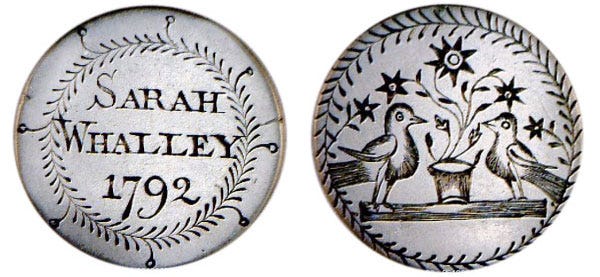
Perhaps one of the most famous era’s in modern history for the revival of the love token is the Victorian era. With new wealth and new social classes defined by that wealth (courtesy of the industrial revolution), tokens of love became common amongst sailors and the like proliferating business overseas3.
Silver pendants depicting lighthouses (beacons of safe harbours) became common amongst the seafaring, while other tokens could be taken as an intention to marry. The softness of the silver made them easy to engrave, the smallness made them easy to carry, and the beauty of them often saw them turned into charms on necklaces, bracelets or broaches.4
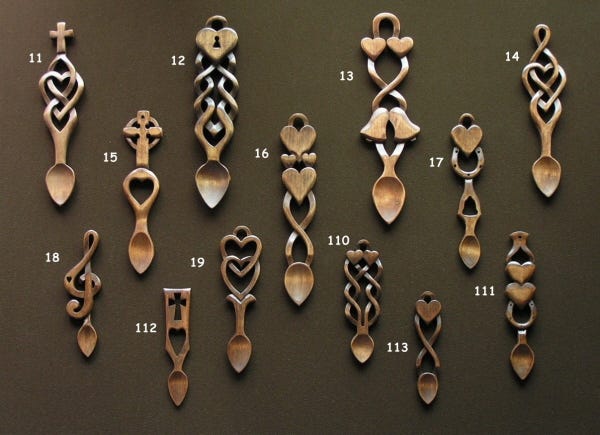
In Wales, the idea of carving a gift for one’s beloved was not limited to tokens of silver, with young men spending hours carving intricate wooden spoons as symbols of their affection. While the history of such spoons in Wales dates as far back to 1667, the trend did not remain there, also becoming common across Europe in the Victorian era. The effort and craftsmanship on display would become a symbol of devotion:
At that time, practical skills in a husband would have been very desirable and a beautifully carved spoon would demonstrate the young man's skills. The carvers would attempt to create more and more intricate designs as they vied for the attractions of a certain girl. The more complicated and difficult to carve a design, the more it would symbolise the depth of the creator's love and desire to labour on behalf of his loved one.5
During the 18th century, a trend of similar workmanship arose, originating from a prince’s lovesick heart. According to Gotthardt in “1785, when Maria Anne Fitzherbert opened a love letter from her admirer, Prince George of Wales, she wasn’t expecting to find an eye, gazing intently back at her.”6 The trend of painting one’s eye, or both eyes onto a small canvas became common, but in many ways remains shrouded in mystery. Art historian Hanneke Grootenboer states that while the miniatures of the eye would clearly signify one lover to another, they often came without names, dates or any signifying information (though sometimes they did come with a lock of hair). Grootenboer suspects the trend of the miniature eye’s followed the trend of sending miniature portraits, with the intention of one’s visage being cradled in another’s hands7. But the eyes, according to Grootenboer, are different:
It is the look of someone that the [lover’s eye] is a carrier of. It is the look that someone wants to imagine, and wants to feel as resting upon themselves.8
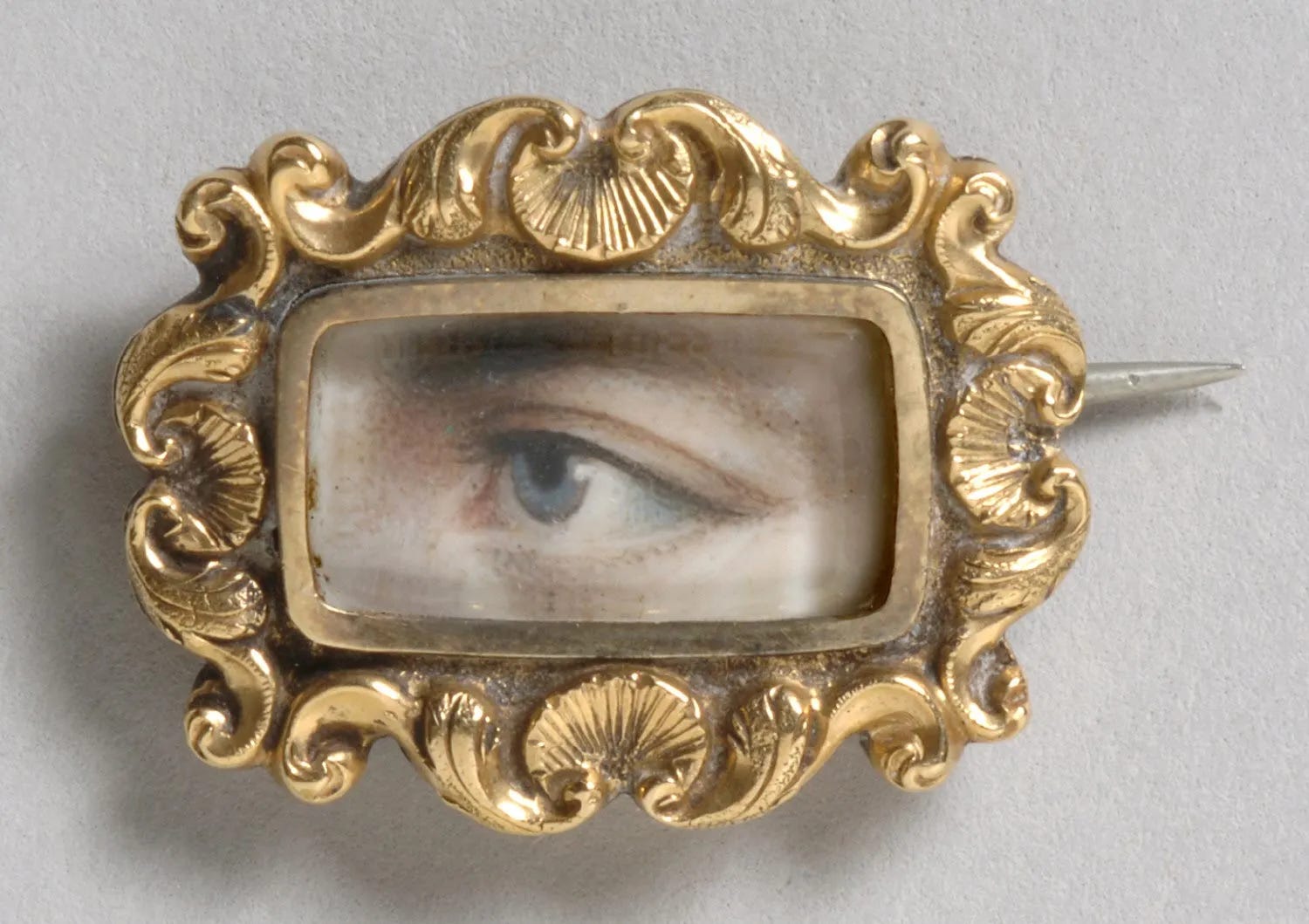
According to Grootenboer, the symbolism of the pieces could become extremely intimate (and intimidating). The arched eyebrow of a husband might suggest a watchful eye for infidelity. An eye secreting a tear or two might be in mourning.
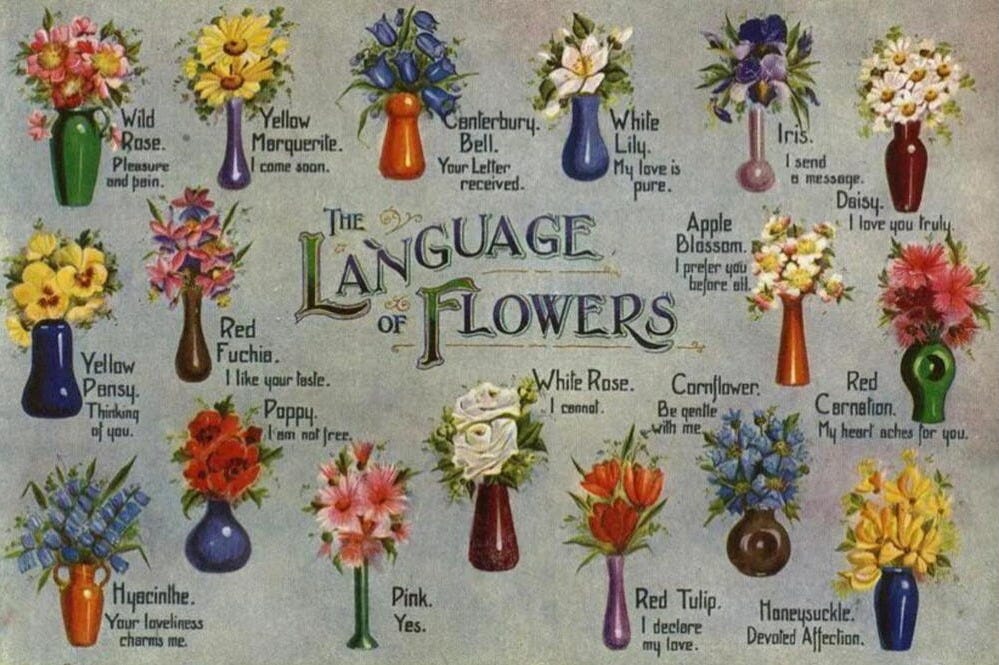
Of course, there are many other symbols of affection which have been lost to the sands of time. While posy rings appear to be making a small comeback, the art of communicating through flowers has unfortunately fallen to the wayside.
Whether you mourn these losses, or are conspiring to revive them, the symbolism of love tokens remains charged. To walk through a museum, to see these devotions to adoration is to remain connected with heart’s long since passed. That human nature has continued to express love and affection through myriad of gifts and dedications has not yet ceased. While, perhaps, they have become a little more ephemeral, a little more…impersonal, love persists none the less.
If you’ve made it this far, thank you for reading! Do you have love tokens of your own that you continue within your culture or relationship? I’d love to hear about them, please share them below.

https://www.europeana.eu/en/stories/the-dowry
https://www.lorfordsantiques.com/l-shaped/traditions-of-the-dowry-and-betrothal/
https://www.perfectlittleparcel.com/post/victorian-love-tokens
https://www.perfectlittleparcel.com/post/victorian-love-tokens
https://www.welsh-lovespoons.co.uk/history
https://www.artsy.net/article/artsy-editorial-mysterious-history-lovers-eye-jewelry
Ibid
Ibid